
Guides / illustrated walkthrough
Jev Architecture Explained: Why 70ms Decision Models Beat LLMs for Workflow Automation
Seven-minute breakdown of why autoregressive LLMs bottleneck workflow automation, how Jev parallel sampling delivers 70–500ms responses, and where specialized models sit on the Pareto frontier.
Quick takeaway
Frontier LLMs excel at human chat and coding agents but impose sequential token generation that blocks sub-second workflow automation. Jev inverts the stack: structured state in, typed probabilistic decisions out—40–200× faster end-to-end (70–500ms) because parallel sampling replaces autoregressive generation. Think logic gates, not paragraphs.
Video source
Caleb Writes Code
Step-by-step walkthrough
- 1
See how the AI application stack reshapes model design
From ChatGPT (2022) through coding agents (2025), models optimized for human assistance and verifiable coding rewards. Workflow automation—email sorting, RAG routing, game ticks, model routing—always felt possible in demos but collapsed under latency and cost at production scale. TypeSafe AI argues the bottleneck is architectural: forcing chat-optimized models into deterministic automation is the wrong abstraction.
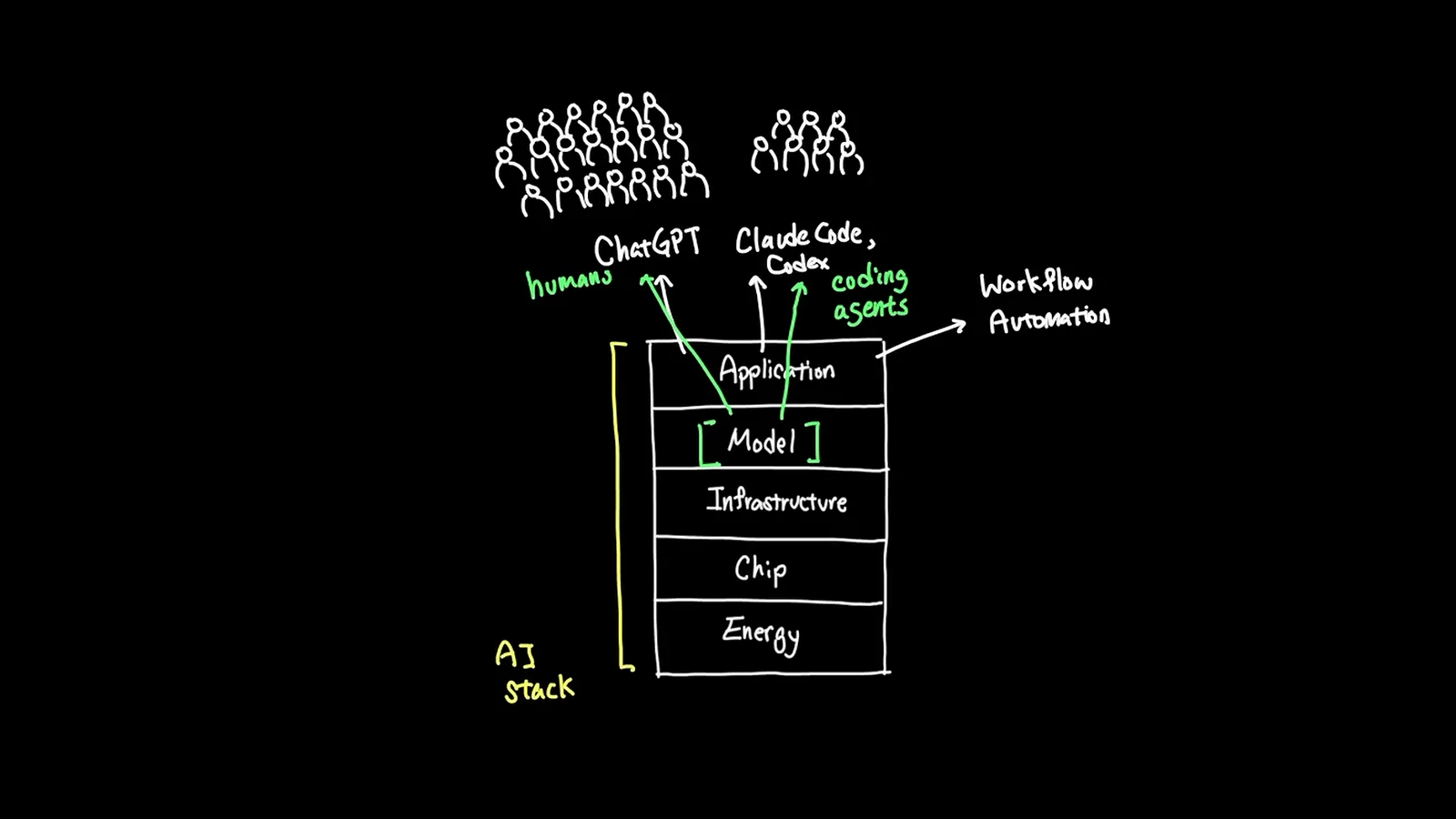
Application-layer demand for speed pulls the stack toward decision-native models.Watch at 0:45 - 2
Compare autoregressive latency with Jev parallel sampling
LLMs can mimic Jev JSON outputs, but they generate tokens one after another until completion—impossible to match 70–500ms end-to-end at scale. Jev is built for parallel sampling and typed probabilistic decisions in a single pass. Community projects showcase speed first: inbox triage, RAG improvement, Doom at 10 queries/sec for ~$7/hour—tasks LLMs can do, but not at automation-grade cadence.
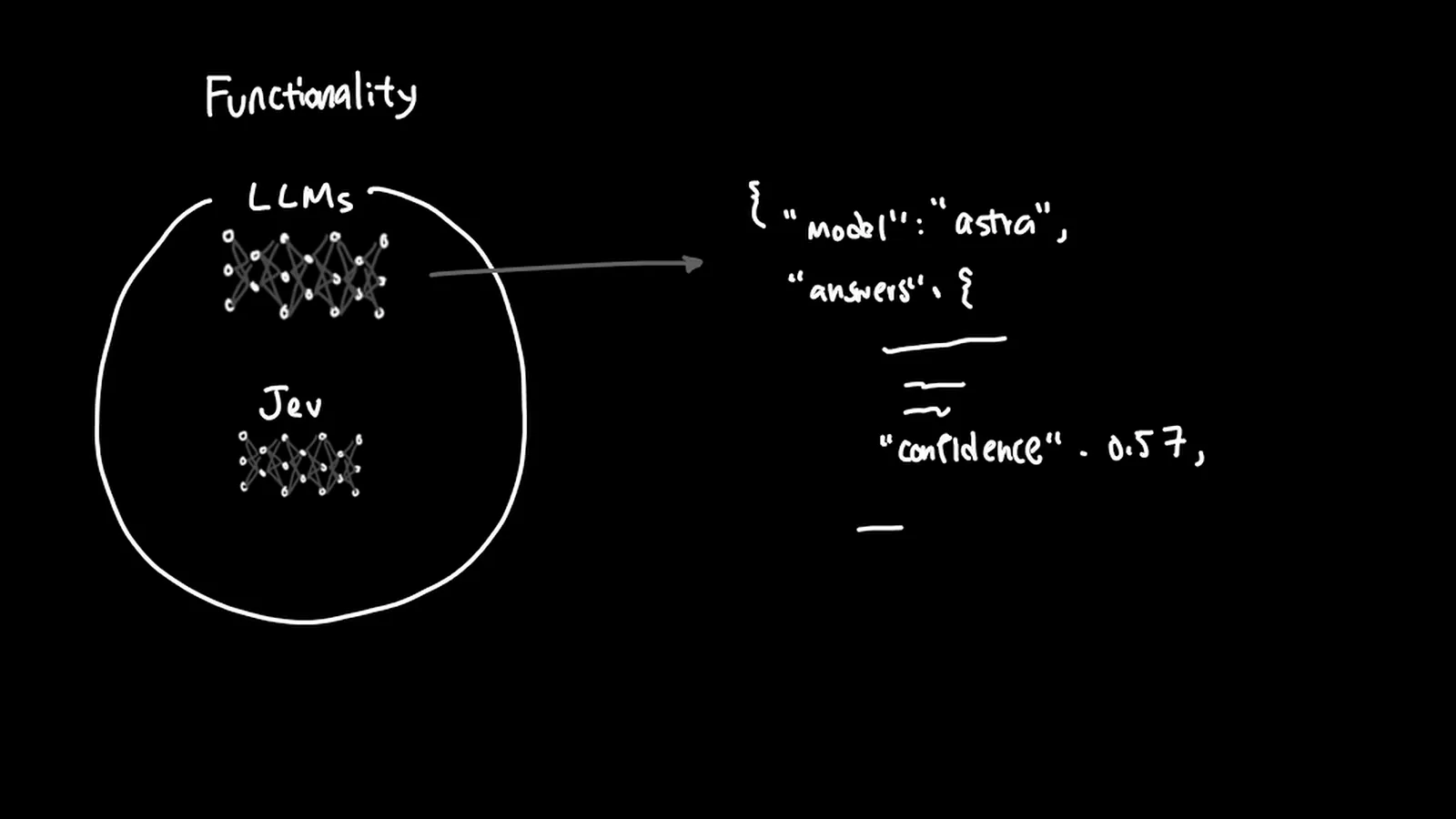
End-to-end 70–500ms vs multi-second autoregressive loops—the automation threshold.Watch at 2:20 - 3
Treat Choice, Score, and Noul as software logic gates
Jev forbids raw-text Q&A. Inputs are structured state; outputs are probability distributions over your schema. Choice picks a category, Score orders on your scale, Noul returns P(yes). These three primitives compose like registers and logic gates—engineers stack abstractions above them rather than parsing free-form LLM replies. Sorting a long plant list through Claude Opus takes seconds; Jev finishes in one to two.
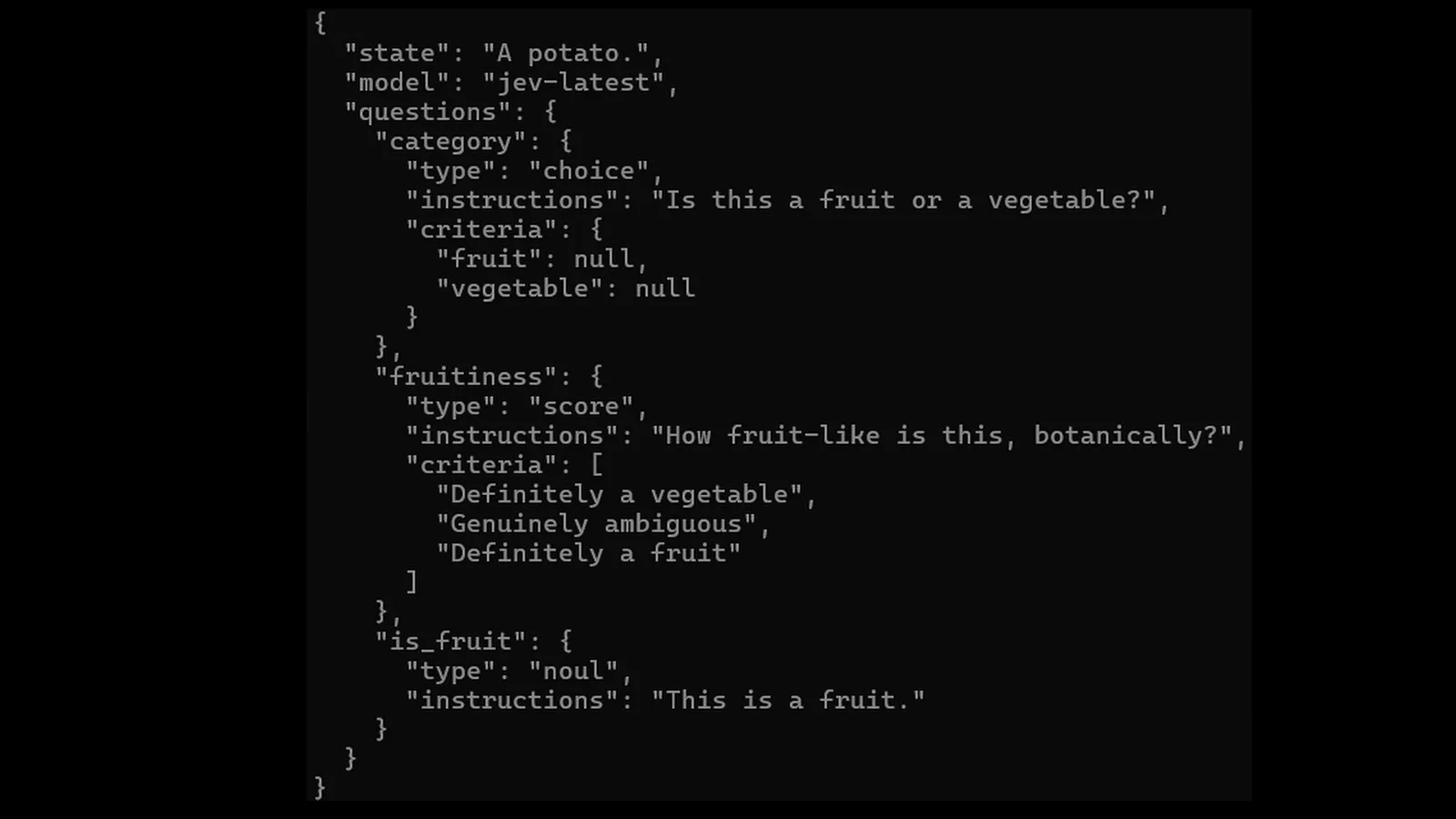
Three typed primitives replace fuzzy natural-language instructions.Watch at 4:30 - 4
Locate Jev on the Pareto frontier of specialized models
On workflow-specific tasks, Jev competes with Flash/Nano tiers (GPT-5.6 Luna, DeepSeek v4 Flash, Sonnet 5) on speed and cost—not on open-ended reasoning. The vision is horizontal growth: frontier models for creative work, daily drivers for mundane chat, and decision models like Jev filling the automation quadrant. Narrow specialists existed before generative AI; Jev makes the category legible again.
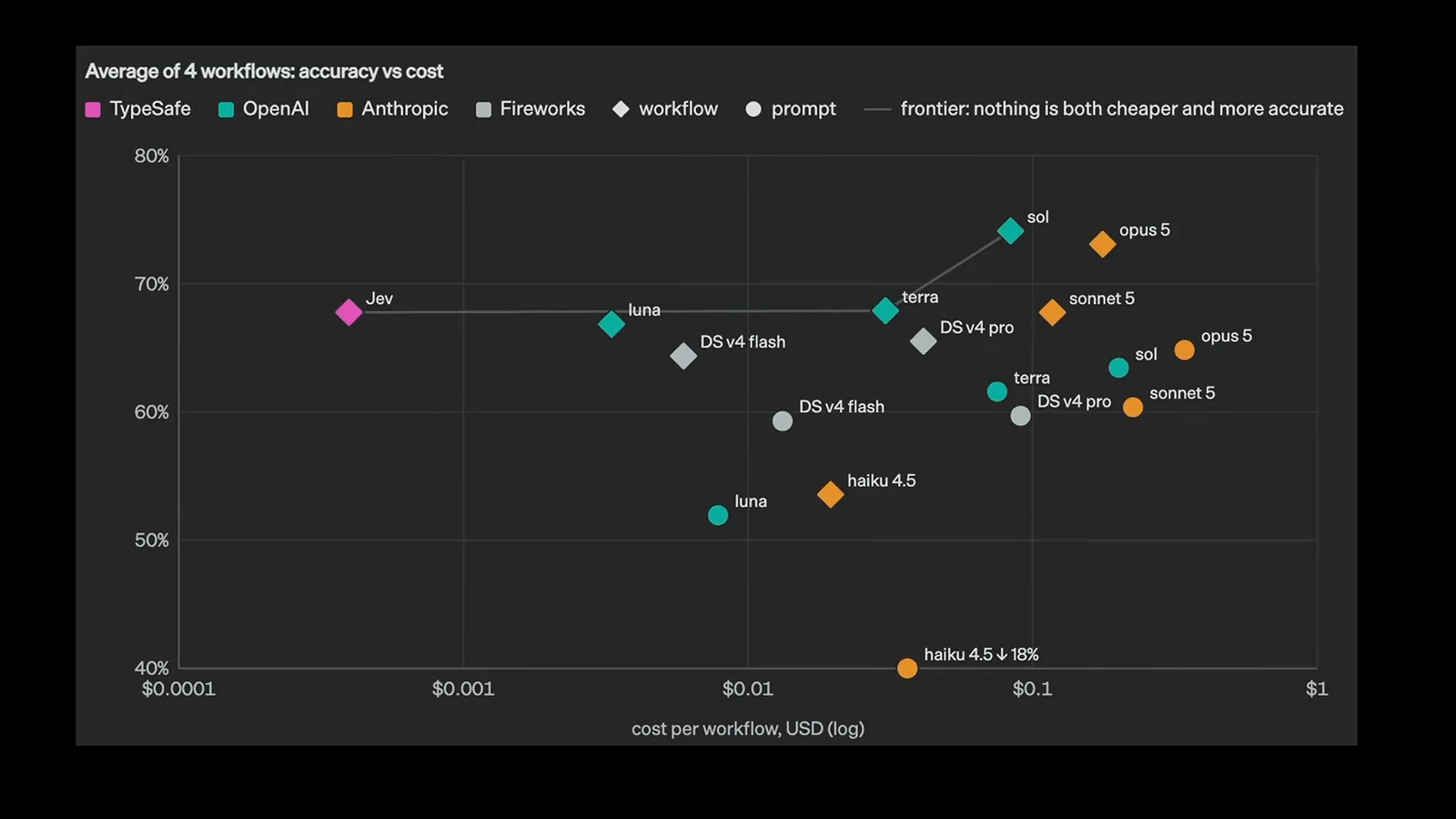
Specialized decision models occupy a distinct cost/latency niche on the frontier.Watch at 5:30
Frequently asked questions
Can frontier LLMs replicate Jev outputs exactly?
Functionally yes—structured outputs and JSON mode can return similar labels. But matching Jev latency (70–500ms) and calibrated probabilities requires a different architecture (parallel sampling, RLCD training), not longer prompts on autoregressive models.
What is RLCD and why does it matter for automation?
Reinforcement Learning for Calibrated Decisions optimizes probability outputs against empirical outcomes instead of human-preferred chat tone. RLHF can make models sound confident while wrong; RLCD targets epistemic honesty so 90% confidence means ~90% accuracy in aggregate—safe for if/else automation.
Is Jev a smaller LLM or a new architecture?
TypeSafe AI has not published a full architecture paper. Likely a transformer using prefill-stage heads for classification/regression rather than sequential decoding—but the operational guarantee is schema-bounded outputs with parallel inference, not model size alone.
When should I still use a general LLM instead of Jev?
Open-ended generation, multi-step reasoning, code synthesis, and creative writing remain LLM territory. Use Jev when software needs a typed decision with confidence: routing, moderation gates, agent tool pick, game state classification, or any smart if-statement at scale.