
Guides / illustrated walkthrough
Jev Classification Quickstart: OpenRouter API, Primitives & Real Probabilities
A hands-on walkthrough of Jev on OpenRouter: System One classification, Choice/Score/Noul primitives, calibrated probability distributions, and multilingual sentiment routing at $0.042/M input tokens.
Quick takeaway
Jev is a System One classifier—not a chat model. Pass unstructured state plus typed Choice, Score, or Noul questions and receive calibrated probabilities in a single forward pass. On OpenRouter it costs $0.042/M input tokens with free output tokens, making high-volume classification practical at sub-cent per call.
Video source
Sam Witteveen
Step-by-step walkthrough
- 1
Understand Jev as a System One classifier, not a chat model
Typesafe AI positions Jev opposite frontier reasoning models: instead of autoregressive text generation, you supply a state blob (ticket text, log line, agent trace) and one or more typed questions. The model returns structured values—selected option, numeric score, or yes/no probability—alongside a normalized distribution. Output tokens are free because the model never generates prose token-by-token.
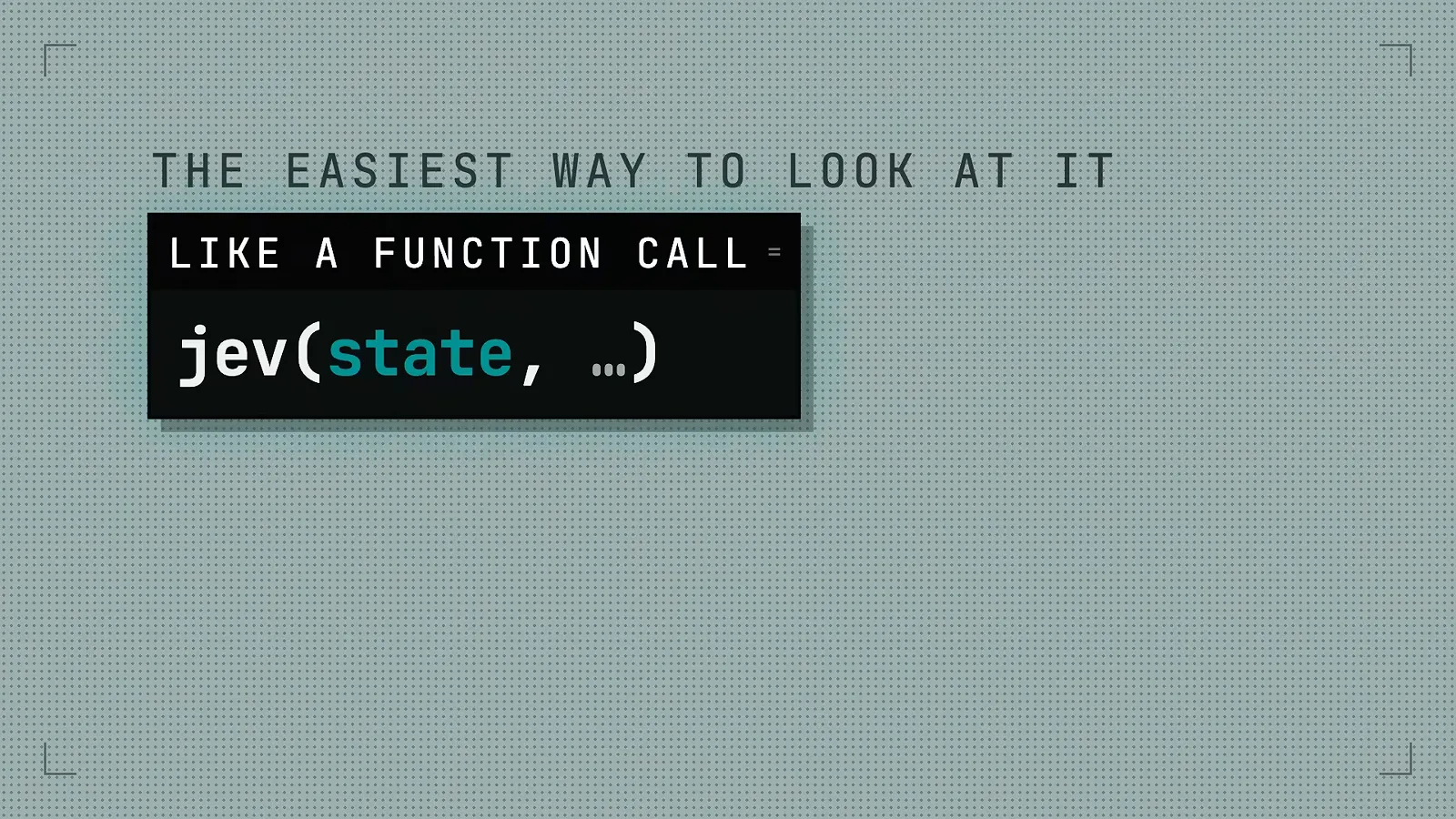
Jev maps software decisions to typed questions over unstructured state—no chat interface required.Watch at 3:05 - 2
Pick the right primitive: Choice, Score, or Noul
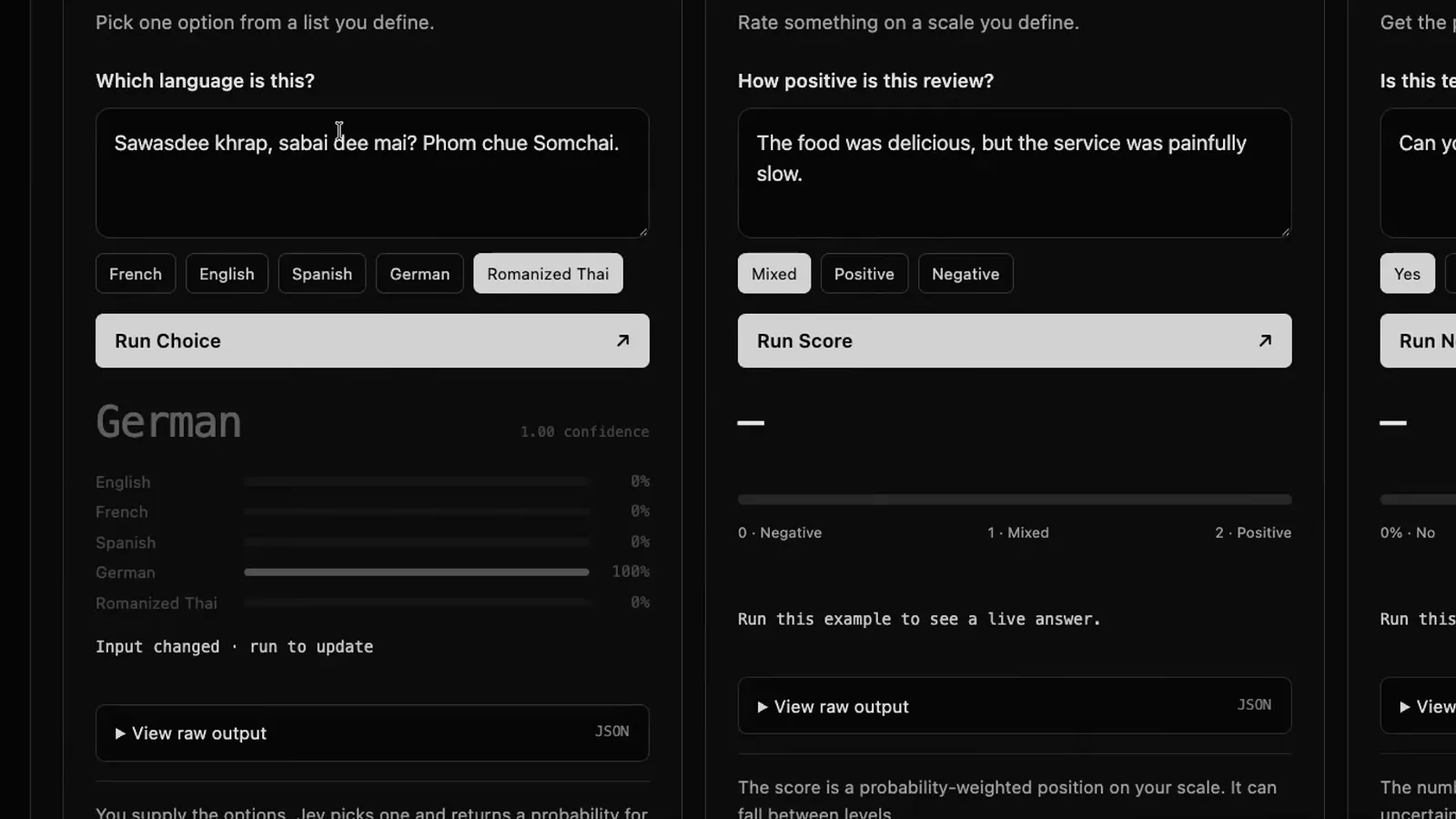
Choice selects one label from your enumerated options (language detection, team routing). Score rates on a scale you define (sentiment 0–2, severity 1–5). Noul returns a calibrated probability that a yes/no statement is true—ideal for refund-requested, time-sensitive, or safety gates. Combine multiple questions in ordinary code; when business rules change, update constants instead of rewriting prompts.
Choice demo: five language classes with per-option probabilities and aggregate confidence.Watch at 5:20 - 3
Run sentiment scoring and watch confidence shift on edge cases
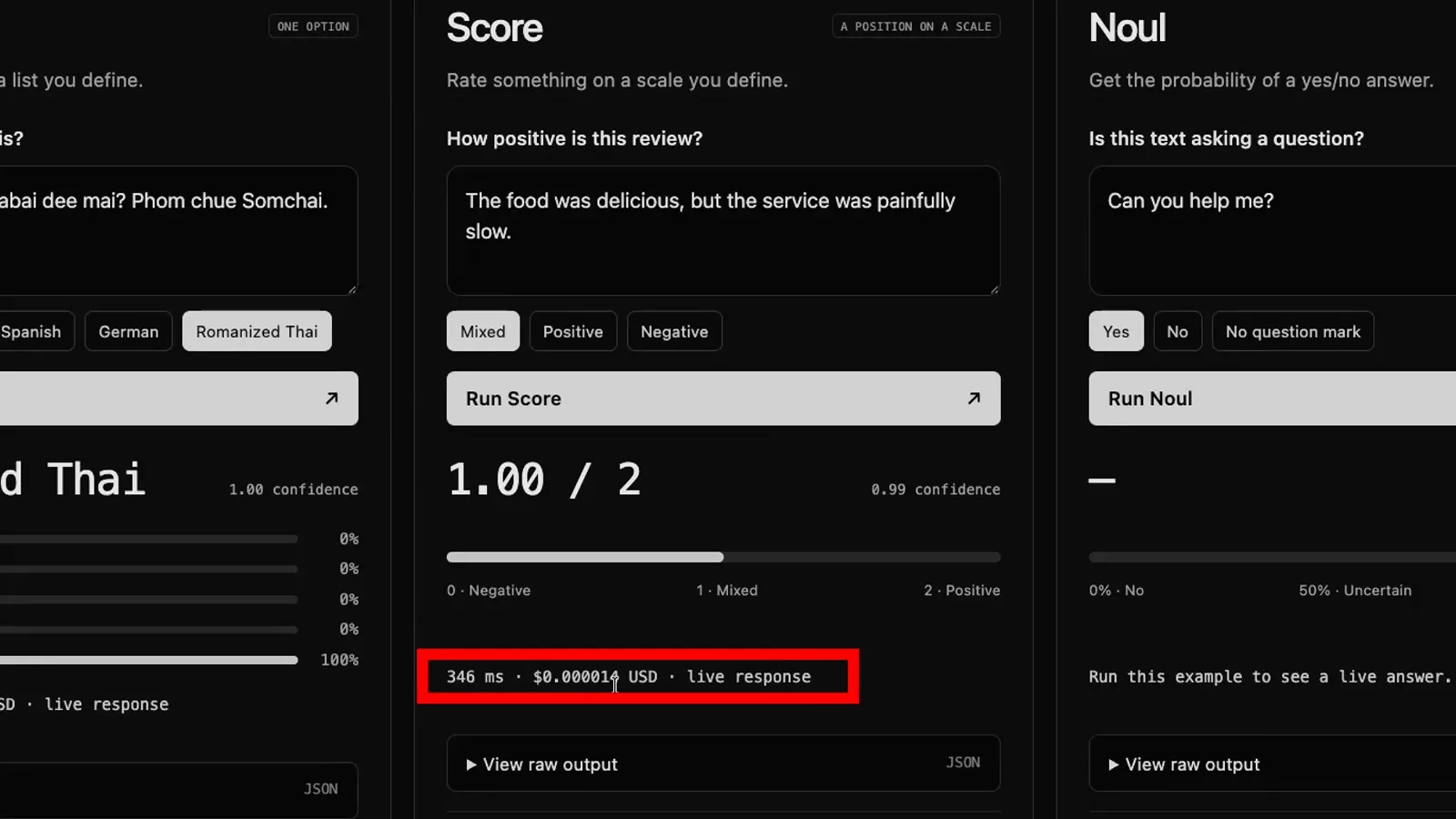
In the live demo, a Score question on a 0–2 sentiment scale returns 2/2 for clearly positive text, 0/2 for negative, and intermediate values for mixed tone. Each call costs roughly $0.000014—cheap enough to chain dozens of micro-classifications. Confidence drops on ambiguous inputs, signaling when to route to human review rather than auto-acting.
Score primitive: sentiment on a 0–2 scale with confidence that tracks input ambiguity.Watch at 6:15 - 4
Inspect API responses for real probabilities, not fake JSON digits
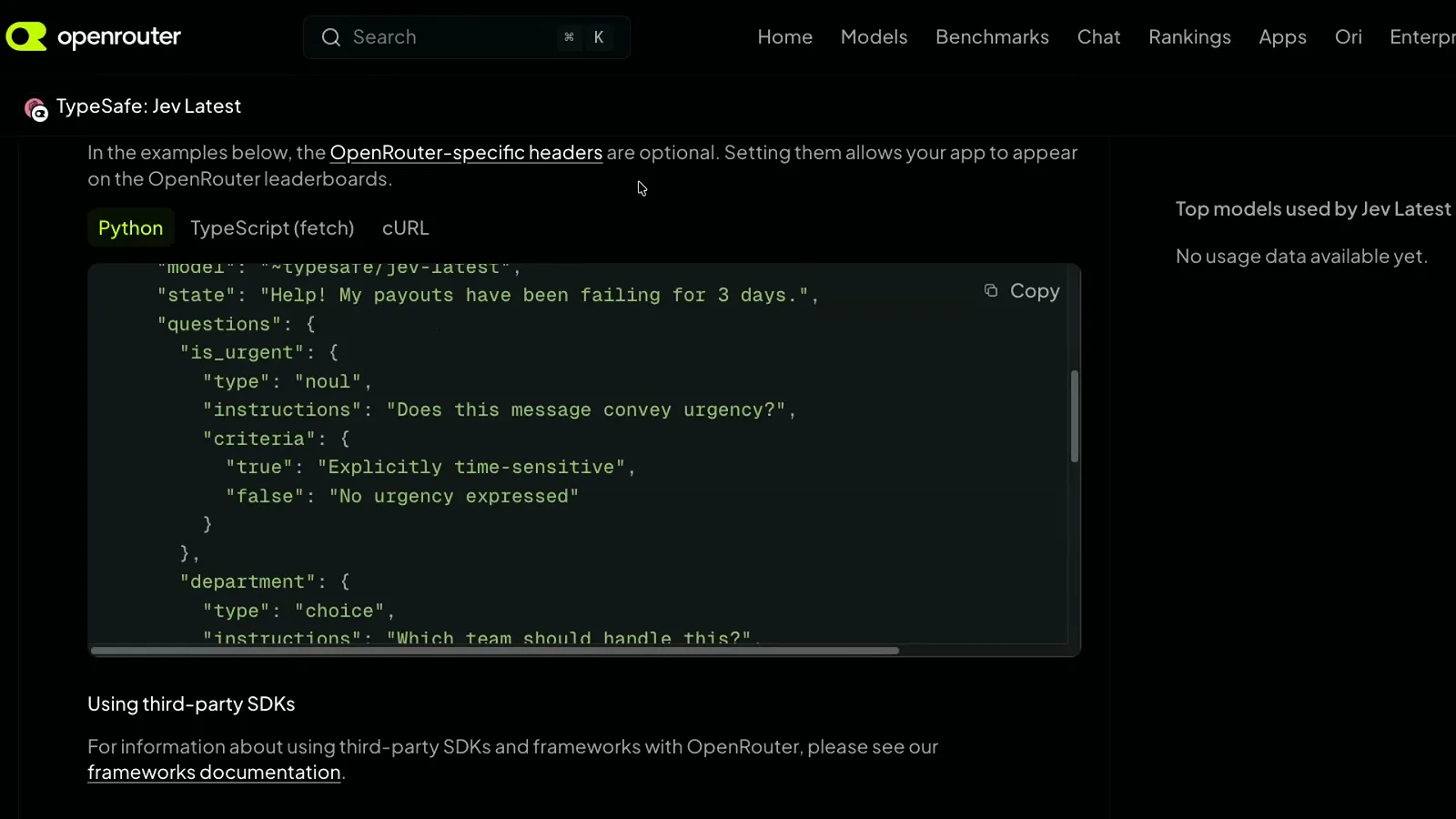
Unlike LLM-as-judge setups that emit the character "0.9" as text, Jev returns native probability tensors: type, selected value, per-option probabilities, and confidence. The demo shows multilingual Choice (including Thai script), parallel Noul gates on the same ticket (refund requested, time-sensitive), and injection-resistant routing—when ambiguity rises, the model surfaces an "unclear" class instead of overcommitting.
API payload: typed answer plus full probability vector—ready for threshold-based automation.Watch at 7:00
Frequently asked questions
Why are Jev output tokens free on OpenRouter?
Jev does not autoregressively generate text. The forward pass computes classification heads directly, so there are no output tokens to bill. You pay only for input state and question schema tokens—typically fractions of a cent per decision.
How is Jev different from asking GPT-4 for JSON classification?
JSON mode still generates tokens sequentially and provides no calibrated uncertainty. Jev returns structurally bounded outputs with native probability distributions trained via RLCD (Reinforcement Learning for Calibrated Decisions), making confidence scores usable as automation thresholds.
Can I run multiple Jev questions on one support ticket?
Yes. Pass several Choice, Score, and Noul questions in a single request or orchestrate them in code. The demo routes billing vs sales, detects refund requests, and checks time-sensitivity in one workflow—each gate exposes its own confidence for independent fallback rules.
Does longer input text improve Jev confidence?
Empirically yes in the demo: very short inputs (two words) yield lower confidence on Noul questions, while fuller context stabilizes probabilities. Design state payloads with enough signal for the criteria you defined, but avoid dumping irrelevant noise that dilutes the decision boundary.
Related guides
Jev API Reference
Request payload shape, authentication, and error handling for production integration.
ReadChoice, Score, and Noul
Deep dive on selecting the minimal output primitive for your next automation step.
ReadSupport Routing Benchmark
Transparent Macro F1, latency, and calibration metrics on labeled ticket routing.
Read